

Payment Flexibility
The project arose from the need to simplify the payment experience at Nubank, reducing the user's cognitive load and increasing conversion in different markets. I was responsible for the entire research and validation process, from test planning to synthesizing results and presenting them to the product team. The starting point was to understand how other markets, outside of Brazil, had already solved this problem to identify standards that we could apply in a consistent and scalable way.
Why was this done?
Usability Test
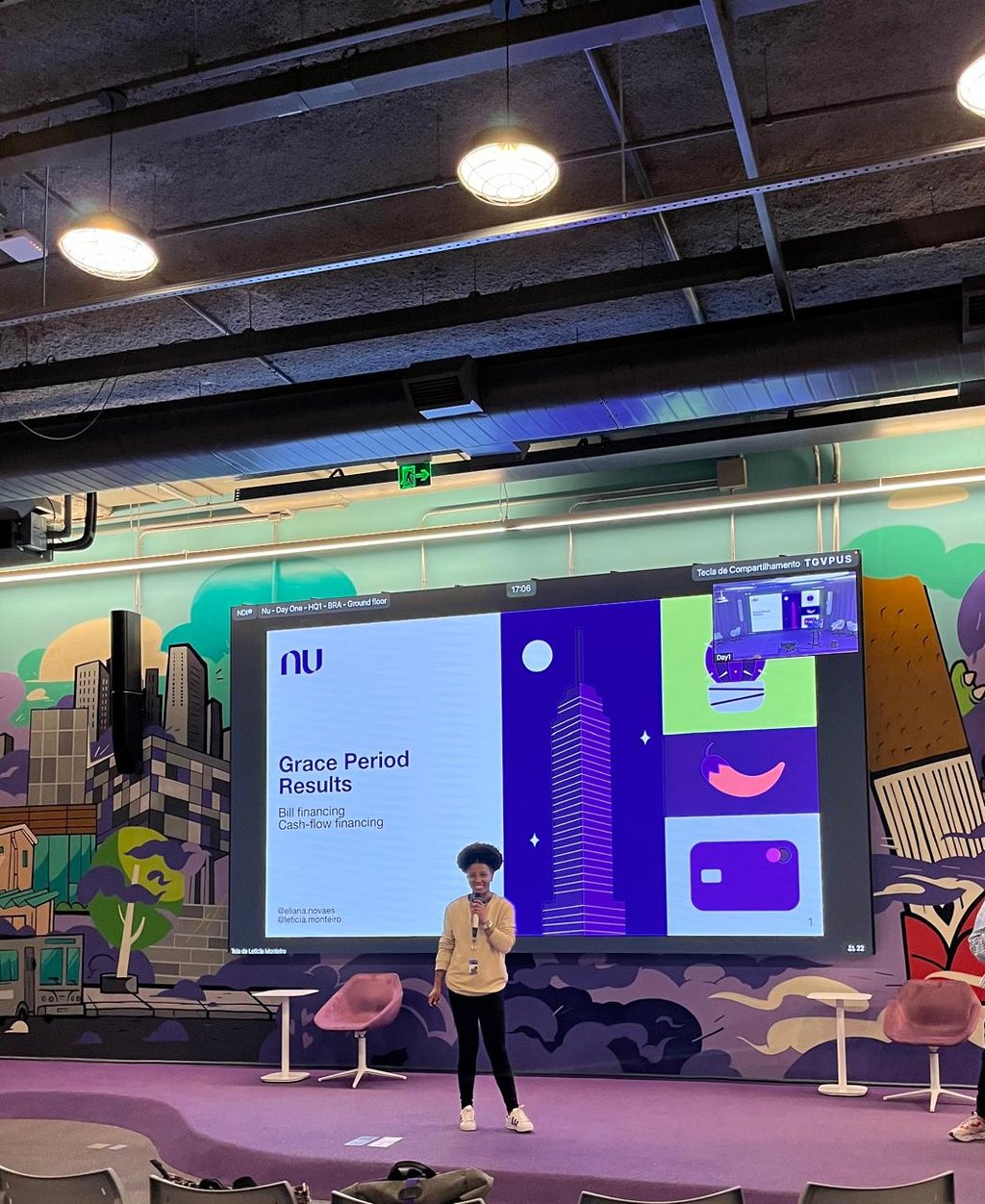
The payment flow via Pix needed to be validated, which approach was more transparent and clear for users using this flow with a grace period.
2,000 test participants
3 flow versions tested
2 collection rounds (July and August)
Version B selected with highest completion rate and lowest hesitation
I identified an opportunity to improve the payment flow via Pix with a grace period. The hypothesis was that the current experience was not clear enough for the user when making a decision, and that a reorganization of the way information was presented could make the flow more transparent and increase user confidence before payment confirmation.
Motivation
Hypotheses
Customer understanding: Validate whether users clearly understand the consequences of postponing the first installment payment.
Mental model: Identify whether the order of the information displayed matches the customer's decision logic.
Transparency: Test which Grace Period approach conveys greater clarity and trust to the user.
I worked in collaboration with the Research team to structure the test, together we aligned the script, defined the hypotheses and organized the collection of the participant base. The choice for unmoderated testing in Maze was intentional: we wanted to observe spontaneous behavior at scale, without the influence of a moderator. We ran two samples on different dates from July 19th to 21st and August 1st to 5th, to validate the consistency of results between groups.
Planning
Planning
2.000 participants
Demographics
Gender Mix
Age Mix
Tool: Maze
Unmoderated usability testing
Fieldwork date
1st sample Jul 19 to 21
2nd sample Aug 1 to 5
How was it done?
We divided participants into 3 groups with random characteristics, each exposed to a different version of the flow. Each group received an email with an interactive prototype of their version and answered the same questions, ensuring comparability between groups.
What was tested
The three versions differed mainly in the order and visual weight of the deficiency and installment information.
The control version maintained the original flow, without changes to the information hierarchy.
Version A anticipated the deficiency information before choosing the installment plan, but generated high cognitive effort, the user needed to process the deficiency before being able to make the installment decision, which fragmented the reasoning.
Version B reorganized the entire hierarchy: it placed the installments and the grace period together, so that when selecting the number of installments and the payment start date, the user could see in real time the impact of their choice on the final value. The decision became an experience of cause and effect, clear, connected and unambiguous.
Users preferred to choose the current or next month, demonstrating that Pix is used for immediate, non-emergency needs.
Many tried to interact with the installment payment screen, even when it wasn't part of the task.
Installment payments proved to be central to users' decisions, reinforcing the need to give this step more prominence and flexibility.
Main findings
Conclusions
The test allowed structuring tasks, collecting data and analyzing user interactions remotely, highlighting the importance of prioritizing critical processes, such as installment payments and grace periods, which directly impact user decisions. It also highlighted the need to focus on behaviors and intentions, map global patterns to ensure consistency and scalability, and reduce cognitive load through iterations based on real data to create clearer and more reliable solutions.
Result
Version B had the highest completion rate for the main task among the 3 groups and generated less hesitation in the grace period, resulting in the recommendation to reorganize the information hierarchy sent to the product team.
For confidentiality reasons, the project's visual materials are not publicly available in this case.